

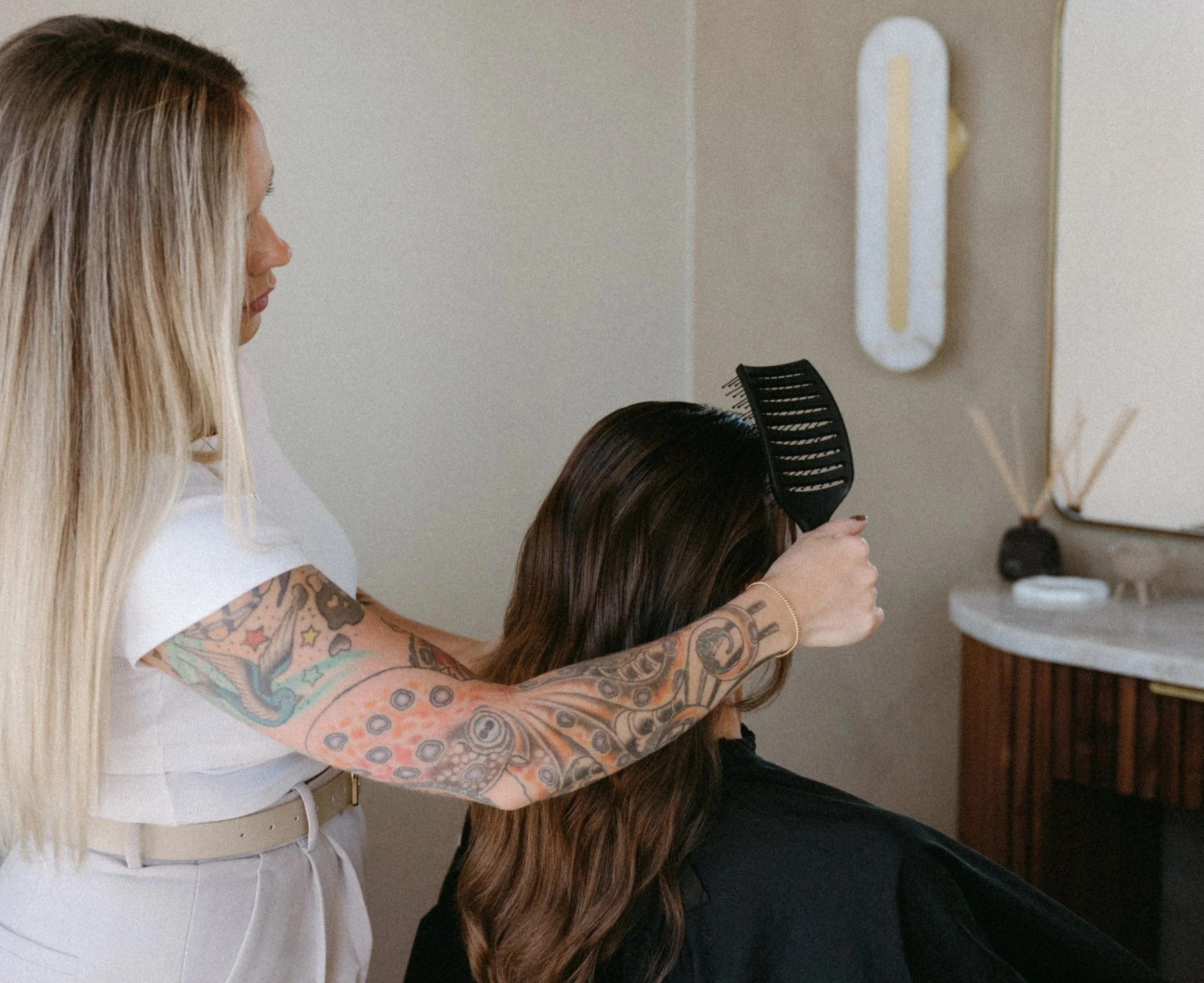
When the temperature drops, we reach for moisturizer for our face and hands. But your scalp is skin too, and it usually gets forgotten until the flaking, tightness, and itching show up. If you’ve noticed scalp problems every time cold weather rolls in, a scalp facial (also called a head spa treatment) might be exactly what you need.
Why Winter Is So Hard on Your Scalp
Cold outdoor air and indoor heat pull moisture from your skin, and your scalp is no exception. Add hot showers, hats that trap friction and sweat, and heavier styling products, and you have the perfect setup for dryness and irritation.
Common winter signs include:
A tight, “stretched” feeling
Small, dry, white flakes
Itching or tingling
Redness or sensitivity
Dull, brittle-feeling hair
Sometimes it’s simply dryness. Other times, winter is making an underlying condition worse.
Why Is My Scalp Itchy?
An itchy scalp is one of the most common complaints we hear, and it has several possible causes:
Dryness, especially in cold, low-humidity weather
Dandruff or seborrheic dermatitis
Product buildup from shampoo, conditioner, dry shampoo, or styling products
Sensitivity to fragrances or harsh ingredients
Skin conditions like psoriasis or eczema
Stress, which can aggravate many scalp issues
Because the causes vary so much, it helps to know what you’re dealing with before choosing a treatment.
A List of Scalp Conditions: Different Types of Scalp Conditions Explained
Hair and scalp conditions can look similar on the surface, but each has its own cause and needs different care. Here’s a quick list of scalp conditions and common scalp diseases you may run into:
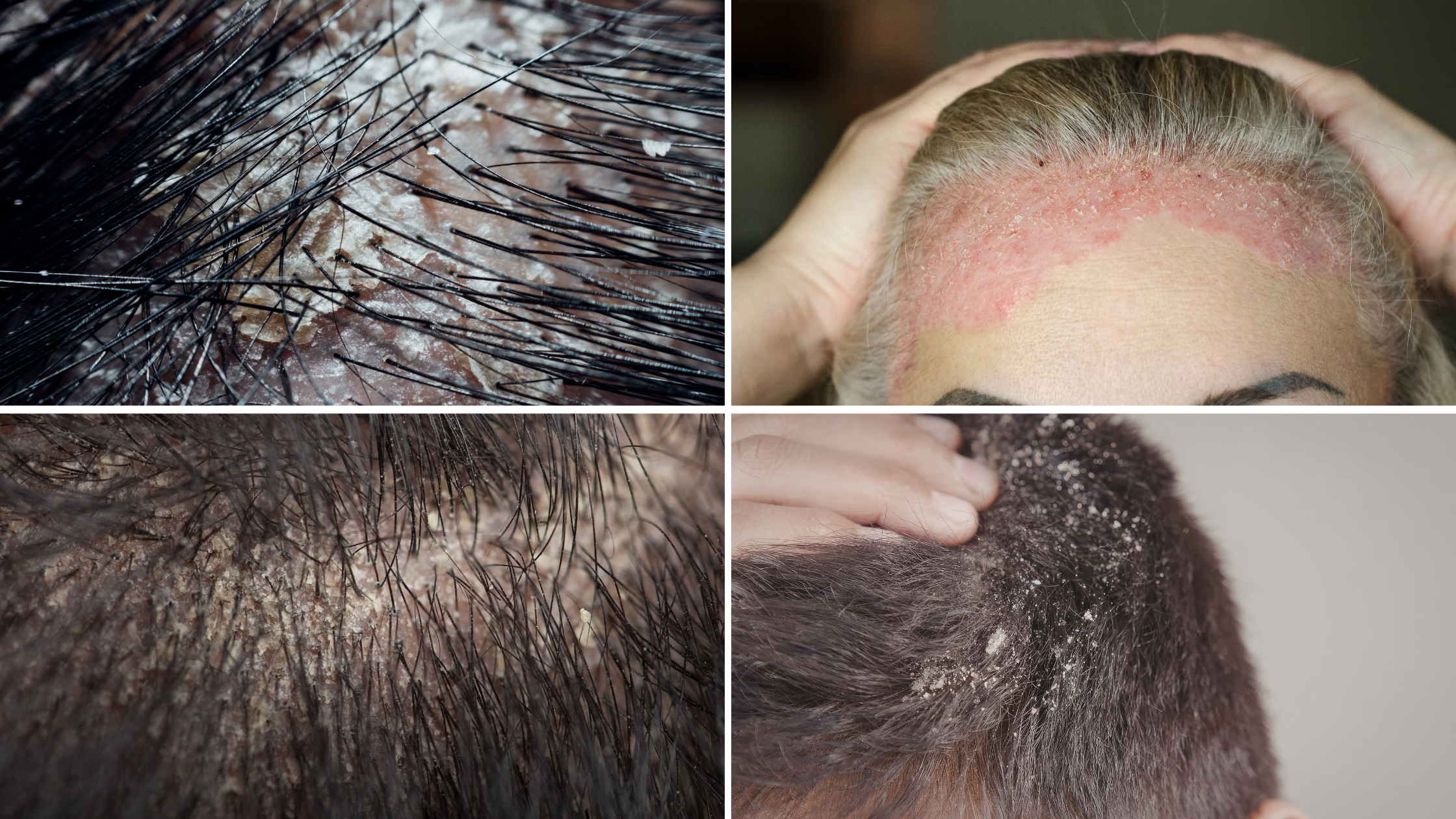
Dry scalp: Caused by a lack of moisture. Flakes are small and white, and the scalp often feels tight. Skin elsewhere on the body may be dry too.
Dandruff: Often linked to a natural yeast on the scalp (Malassezia) combined with oil and individual sensitivity. Flakes tend to be larger and may look yellowish or oily.
Seborrheic dermatitis: A more persistent, inflammatory form of dandruff with redness, greasy scaling, and itching. Winter is a common trigger for flare-ups.
Scalp psoriasis: An autoimmune condition that causes thick, silvery-white scales on red patches. It can extend beyond the hairline.
Eczema (atopic dermatitis): Dry, itchy, inflamed skin that can also show up on the scalp.
Contact dermatitis: Irritation or an allergic reaction to hair products, dyes, or ingredients.
Product buildup: Residue that clogs follicles and leaves the scalp itchy, heavy, and flaky.
Folliculitis: Inflamed or infected hair follicles that look like small, tender bumps.
What Causes Dandruff? Why Do I Have Dandruff All of a Sudden?
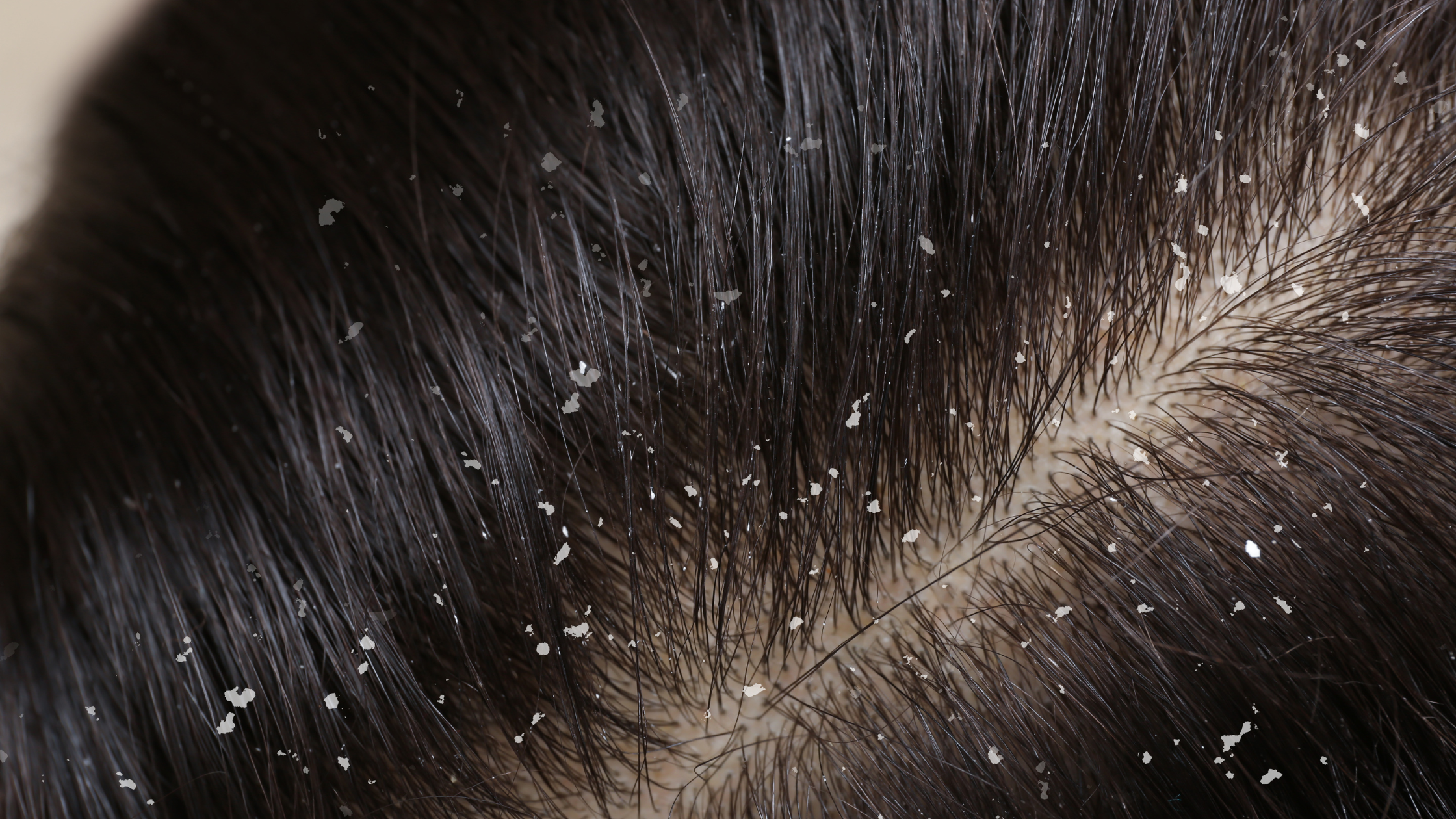
If your scalp is suddenly flaky and you find you’re asking “why do I have dandruff all of a sudden?”, you’re far from alone. A dandruff scalp is incredibly common, and the reason for dandruff usually comes down to a mix of factors:
Yeast and oil: Malassezia lives on most scalps, but in some people it triggers irritation and flaking.
Seasonal changes: Cold, dry winter air is a frequent culprit for sudden flare-ups.
Washing too much or too little: Both can disrupt your scalp’s balance.
Product changes: A new shampoo, styling product, or dye can cause irritation.
Stress and hormones: Both can affect oil production and inflammation.
Underlying skin conditions: Seborrheic dermatitis, eczema, and psoriasis can all look like dandruff.
Dandruff is not a hygiene problem, and it isn’t contagious. It’s a very manageable condition once you understand what’s driving it.
How to Get Rid of Dandruff
There’s no one-size-fits-all answer, but these steps help many people:
Identify your scalp type. Dry flakes and oily flakes need different care.
Use a gentle, targeted shampoo. Look for ingredients like zinc pyrithione, selenium sulfide, or ketoconazole for dandruff-prone scalps, and follow the label.
Exfoliate gently. Removing buildup and dead skin helps treatments work better.
Hydrate dry scalps. Use moisturizing, fragrance-free products and avoid very hot water.
Be consistent. Dandruff can come back if you stop your routine.
Get a professional scalp analysis. A trained eye can spot what’s really going on.
Book a scalp facial. A scalp facial can help reset your scalp to a good starting point for the at-home treatments to be most effective.
What Is a Scalp Facial?
Think of it as a facial for the skin that grows your hair. A scalp facial is a professional scalp spa treatment that typically includes a scalp analysis, gentle exfoliation to lift away flakes and buildup, a deep cleanse, a nourishing treatment or mask, and a relaxing massage to boost circulation.
At Willow + Sage, every scalp treatment is tailored to your scalp’s needs, because a dry, tight scalp needs something very different from an oily, congested one.
How Scalp Facials Help in Winter
They restore moisture. Hydrating treatments replenish what cold air takes away, easing tightness and flaking.
They clear buildup and dead skin. Exfoliation removes flakes and residue so your scalp can absorb moisture better.
They soothe irritation. Calming ingredients can reduce the redness and itch that come with sensitive scalps.
They support a healthy scalp environment. A clean, balanced scalp is the foundation for healthy-looking hair. A facial can’t treat a medical condition, but it can keep your scalp comfortable and well cared for.
They feel incredible. The massage relieves tension and gives you a much-needed moment of calm during a busy season.
Winter Scalp Care Tips for Home
Turn the water temperature down. Hot showers dry out the skin.
Find a wash routine that cleans without stripping.
Choose gentle, fragrance-free products when possible.
Wear soft, breathable hats.
Run a humidifier indoors and stay hydrated.
Book a scalp facial every [4-6 weeks] to keep your scalp balanced all season.
When to See a Doctor
If your scalp is very red, painful, oozing, or has thick scaling, or if you notice hair loss, check in with a doctor or dermatologist. Some scalp problems need medical treatment, and a scalp facial works best alongside that care.
Ready to Treat Your Scalp?
Don’t let winter leave you itchy, flaky, and uncomfortable. Book a scalp spa treatment at Willow + Sage and give your scalp the care it deserves.